
Game Development · 2021
Easy There
A Java Minecraft Forge mod adding RPG-style skill progression, a custom dungeon, a boss entity and quiz puzzles by extending the game's event system and modding APIs.
- Role
- Developer
- Period
- 2021 (repository activity July–October)
- Status
- Historical project; release and maintenance status not confirmed
- Type
- Independently developed Minecraft modification
- Category
- Game Development
- Technologies
- Java · Minecraft Forge · Forge Modding API · Gradle · NBT · Client-Server Networking · Event-Driven Programming · Procedural Generation
Links
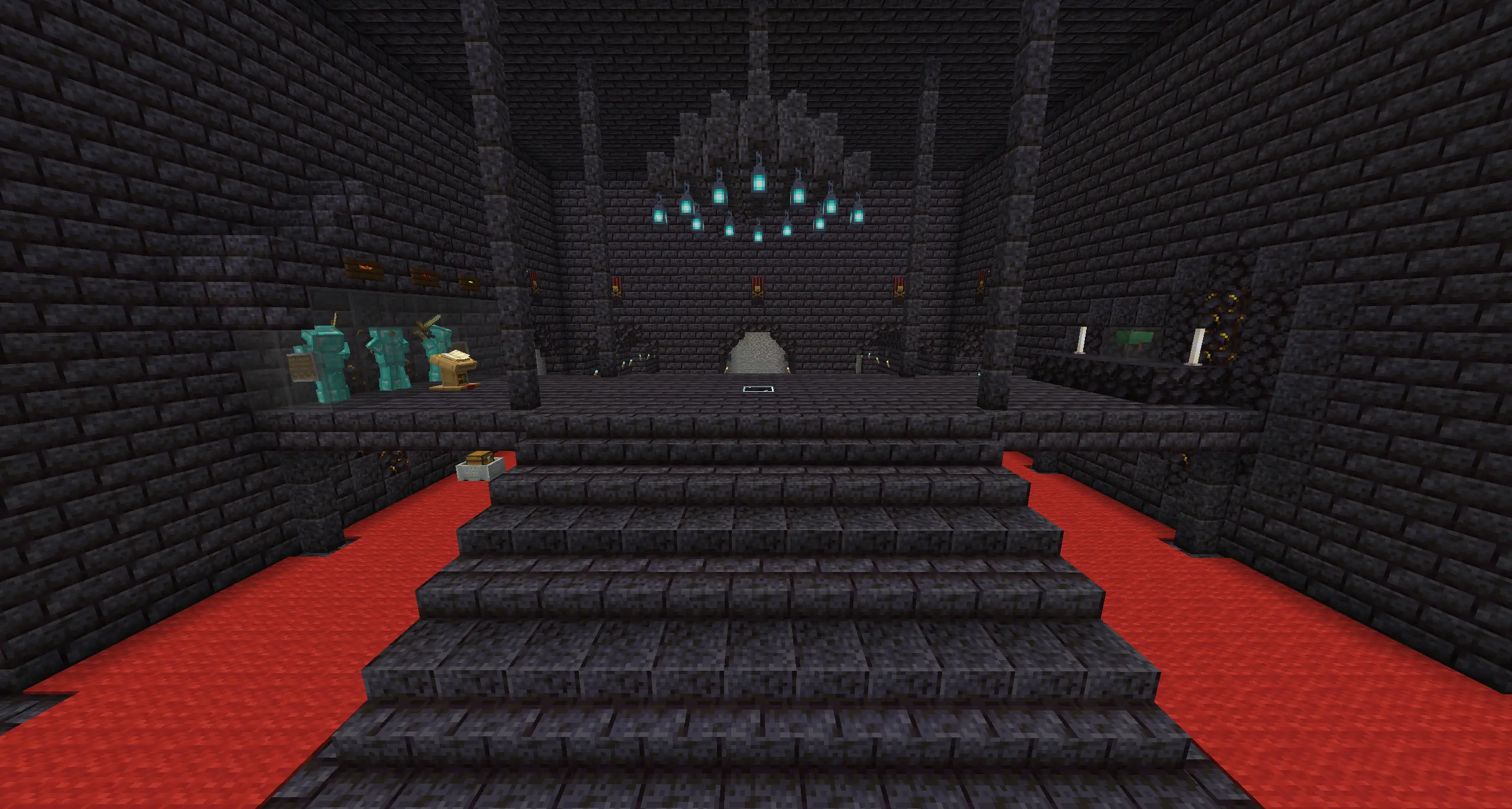
Easy There is a Minecraft Forge modification that adds RPG-inspired character progression, a custom dungeon, a boss encounter and interactive puzzles. It explores how interconnected gameplay systems can extend an established game engine without modifying the game’s core implementation.
Context and problem#
Minecraft is an extensive sandbox, but its default progression offers little RPG-style specialization or structured dungeon content. Beyond the gameplay itself, the project was an engineering exercise: integrating several systems into Minecraft’s event-driven architecture while managing persistent state and client-server communication.
What it does#
- Custom blocks, items, entities, recipes, structures and gameplay systems.
- RPG-inspired progression with separate combat, mining, farming and foraging skills.
- Custom XP-gain and level-up events that coordinate progression.
- Player and chunk capabilities that hold additional gameplay state.
- NBT serialization and deserialization for persistent world and entity data.
- Client-server packets that synchronize skill information, statistics and interactions.
- A custom Aura dungeon integrated into world generation, with traps and quiz-based puzzles.
- A custom Aura boss entity with combat goals.
- Custom inventory, block entity and recipe infrastructure, including a gem-refining system.
- Configurable gameplay and world-generation settings, and a Gradle build on Minecraft Forge.
Engineering challenge: extending an event-driven engine#
New mechanics had to be added without touching Minecraft’s core code. The mod uses Forge’s event system, registries and capability APIs: it registers entities, items, blocks, recipes, structures and capabilities during initialization, attaches capabilities to players and chunks through Forge events, and introduces its own events for XP gains and skill level changes so that gameplay systems can react to each other through registered handlers.
Engineering challenge: persistent player and world state#
Minecraft’s standard data structures do not cover custom skill data, so the mod associates extra state with game objects through Forge capabilities. There are separate implementations for combat, mining, farming, foraging and player statistics, attached to players through capability attachment events. Chunk-specific information uses custom capability providers.
Engineering challenge: client-server networking#
Multiplayer separates authoritative server state from what the client displays. The mod has a dedicated packet handler that registers custom packet types through Forge’s networking infrastructure, with messages for skills and statistics and for quiz interactions and other gameplay events. I have not latency-tested the networking layer or audited its security, so I make no claims about either.
Engineering challenge: procedural dungeon generation#
The Aura dungeon is registered as a custom structure and connected to configured world-generation features, with generation rules for supported biomes, handling for different world-generation configurations, and jigsaw-based placement to assemble dungeon components.
Engineering challenge: custom entity behavior#
The Aura boss is a custom entity with its own attributes, combat goals and attack behavior, working within Minecraft’s AI, combat and entity lifecycle systems. It connects to the dungeon through traps and quiz puzzles, and some mechanics in the repository are unfinished or commented out.
Scope and credits#
The project is development against a substantial existing Java application and modding API: framework lifecycle constraints, event-driven design, persistent state, networking and procedural generation in one codebase. It builds on Minecraft Forge, and the framework and Gradle boilerplate are not original engineering work. I have not measured lines of code, downloads, multiplayer performance, build stability or test coverage.